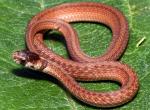
STRIPED WHIPSNAKE Coluber taeniatus
DESCRIPTION:
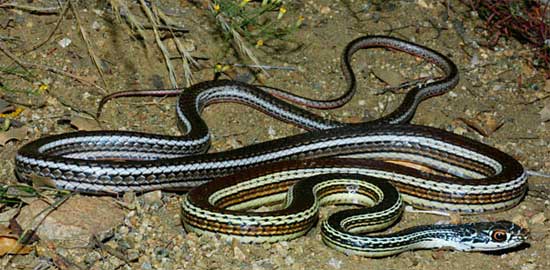
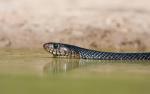
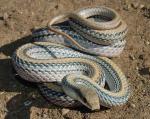
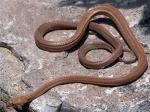
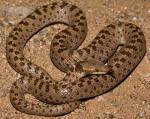
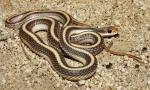
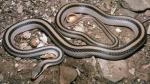
A long (up to 1,652 mm or 65" in total length), slender, dark brown, gray, or black snake with a prominent light stripe running the length of the body along each upper side.
Thin, dashed, secondary stripes mark the lower sides. The primary stripes are yellow on the anterior portion of the body and grade to pale gray on the posterior half of the body. A thin black line runs down the center of each primary stripe on the anterior half of the body. The ventral surface is cream or white under the chin and neck, grading to yellow at mid-body, and dark pink under the tail. The eyes are large and the pupils are round. The scales are smooth. Stripes that run the length of its body and dark pink coloration under its tail distinguish this snake from the similar looking Sonoran Whipsnake.
DISTRIBUTION:
This snake is an inhabitant of Arizona's northern plateaus and central mountains. Isolated populations occur in the Kofa Mountains of Yuma County and in Graham County's Santa Teresa and Pinaleño mountains. It is found at elevations ranging from 2,800' to about 7,500'.
HABITAT:
The Striped Whipsnake is primarily an inhabitant of Interior Chaparral, Great Basin Conifer Woodland, Plains Grassland, and Great Basin Grassland communities. It also enters the lower reaches of Petran Montane Conifer Forest in some areas. In the Kofa mountains of Yuma County it occurs in Arizona Upland Sonoran Desertscrub. It inhabits a wide variety of terrain types including canyons, steep slopes, foothills, open plains, open plateaus, and riparian corridors.
BEHAVIOR: This diurnal, very fast moving, and alert snake is often seen cruising for food in the mid-morning sun. It often hunts with its head elevated off the ground. It is a good climber that often retreats into the branches of trees when threatened. It hibernates during the cold months of late fall and winter. It does not hesitate to bite when captured.
DIET:
It actively forages for lizards, snakes, mice and other small mammals, birds, frogs, and a variety of insects.
REPRODUCTION:
Mating takes place in spring and a clutch of up to 12 eggs is laid in late spring or early summer. Hatchlings begin to emerge in August.
|