NARROW-HEADED GARTERSNAKE
Thamnophis rufipunctatus
DESCRIPTION:
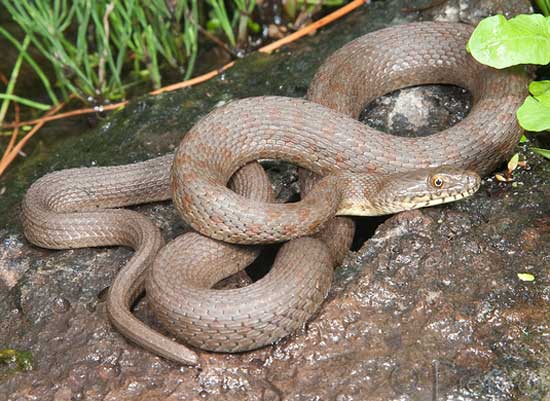
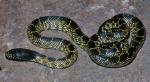
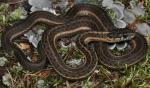
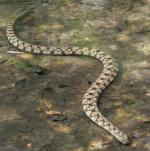
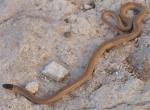
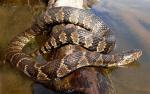
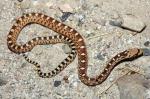
A medium-sized (up to 1,115 mm or 44" in total length) gray, greenish tan, tan, or brown snake with paired dark gray, brown, or orange spots running the length of the back.
The spots become small and muted posteriorly and eventually fade into the background color as they near the tail. Additional spots mark the sides of the body. The underside is pale cream grading to light gray posteriorly. There are often two parallel rows of dark blotches running the length of the belly. The long and narrow snout gives this snake its common name. The eyes are positioned high on the head and the pupils are round. The dorsal scales are keeled.
DISTRIBUTION:
This snake is found along and below central Arizona's Mogollon Rim at elevations ranging from ca. 2,200' to 8,000'. Many Arizona populations are in decline and some populations may already be extirpated. Possible threats include introduced crayfish, introduced predatory fish, streamside cattle grazing, heavy recreational use of streams, and water diversions.
HABITAT:
It is usually encountered in or near clear, rocky streams or rivers in communities ranging from Arizona Upland Sonoran Desertscrub through Petran Montane Conifer Forest.
BEHAVIOR:
This highly aquatic diurnal and evening crepuscular snake forages underwater and basks on banks and in the branches of willows that overhang the water. It has been observed (author obs.) foraging in the water well after sunset on several occasions. It shelters and thermoregulates under streamside rocks and in streamside crevices. It hibernates in rocky outcroppings high above the flood line during the cold months of late fall and winter. When encountered it is often quick to dive under the water and seek shelter under the rocks on the bed of the stream.
DIET:
The Narrow-headed Gartersnake eats fish including dace, chubs, and both native and introduced trout. It may occasionally prey on salamanders. It has also been observed eating Smallmouth Bass on one occasion.
REPRODUCTION:
Mating takes place in the spring and up to 18 young are born in summer.
REMARKS:
Protected in Arizona. It is against Arizona State law to harass, harm, pursue, hunt, shoot, wound, kill, trap, capture, or collect this animal or to attempt to engage in any such conduct.
|