TIGER RATTLESNAKE Crotalus tigris
DESCRIPTION:
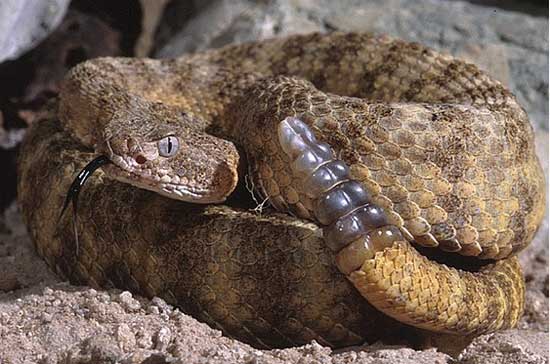
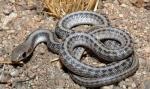
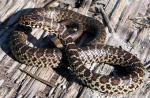
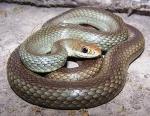
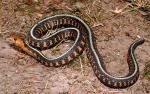
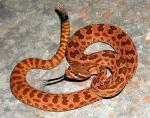
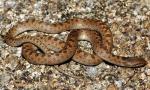
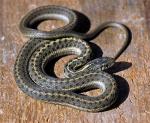
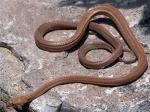
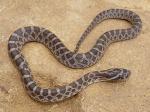
A medium sized rattlesnake (up to 885 mm or 35" in total length excluding rattle). Base coloration is variable (even within local populations). Most specimens are either blue-gray or orange-brown. There is often an infusion of peach or orange coloration on the lower sides of the body.
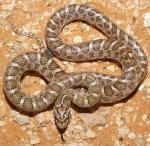
Crossbars or "tiger" bands formed by dark scales and small dark flecks cross the back. The pupils are vertically elliptical and the dorsal scales are keeled. The neck is slender and the triangular head is very small relative to the size of the body. On the end of the tail is a large rattle composed of a series of loosely interlocking keratinous sections. A new section is added each time the snake sheds its skin. Its relatively distinct bands, small head, and lack of black rings on the tail tip distinguish this snake from the similar looking Speckled Rattlesnake.
DISTRIBUTION:
This snake is found in central, south-central, and extreme southeastern Arizona at elevations ranging from about 1,000' to 5,000'.
HABITAT:
The Tiger Rattlesnake is found in Arizona Upland Sonoran Desertscrub, Chihuahuan Desertscrub, Interior Chaparral, and Madrean Evergreen Woodland communities, usually on rocky slopes or in washes within rocky mountains and foothills. It is occasionally found in the desert flatlands but rarely strays more than a mile from foothills, mountains, or rocky habitat.
BEHAVIOR:
The ground-dwelling Tiger Rattlesnake is nocturnal during the hot summer months and diurnal and crepuscular in fall. It hibernates during the cold months of late fall and winter. Like the other "pit-vipers" (members of the subfamily Crotalinae) this snake uses heat sensing pits (one on each side of the face between the eye and nostril) to detect warm-blooded predators and prey.
DIET:
Prey consists of mice, other small mammals, and lizards. Venom injected through long, hollow, retractable fangs is used to kill and begin digesting prey.
REPRODUCTION:
Mating takes place during the summer monsoon (July and August). A litter of up to 6 young is born in summer.
REMARKS:
This rattlesnake is capable of delivering potent venom. If encountered it should be left alone. A large percentage of envenomations occur when a snake is handled or abused.
|