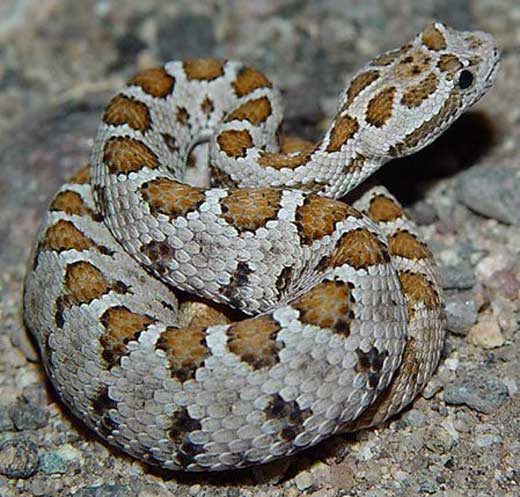
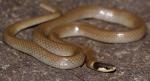
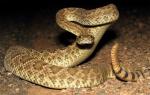
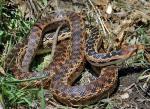
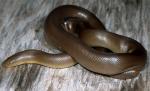
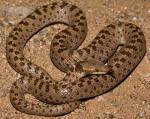
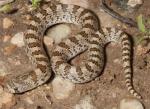
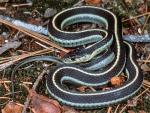
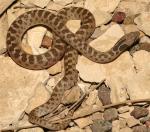
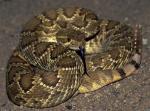
Crotalus enyo - Baja California Rattlesnake
Description
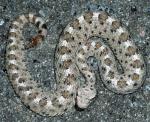
The maximum reported length of this species is 89.8 centimetres (35.4 in) (Klauber, 1972). It is sexually dimorphic, with the males typically being larger than the females. The head is remarkably small and narrow, while the eyes are proportionately large
Geographic range
Found in western Mexico. In the north it is found in the Baja California Peninsula from around Río San Telmo on the west coast and from opposite Isla Angel de la Guarda on the gulf coast, south to Cabo San Lucas. Also found on the following islands in the Gulf of California: San Marcos, Carmen, San José, San Francisco, Partida del Sur, Espírita Santo and Cerralvo. Off the pacific coast it is also found on the island of San Margarita. The type locality is "Cape San Lucas, Baja California Sur."
Habitat
Prefers desert, but in the northwestern part of its range it can be found in chaparral country, while in the cape region (Sierra de San Lázaro) it occurs in pine-oak and tropical deciduous forest. It can be found in rocky areas with arid thornscrub and cacti, but sometimes also in sand dunes. Often attracted to human habitation where it has been found in piles of refuse.
Conservation status
This species is classified as Least Concern (LC) on the IUCN Red List of Threatened Species (v3.1, 2001). Species are listed as such due to their wide distribution, presumed large population, or because it is unlikely to be declining fast enough to qualify for listing in a more threatened category. The population trend is stable. Year assessed: 2007.
Feeding
Snakes of this species, regardless of their size, are known to eat small rodents, lizards, and centipedes. This is in contrast to many other rattlesnake species that prey on lizards almost exclusively as juveniles, switching to mammals as adults. With C. enyo, small snakes eat lizards more often than do large ones, and large snakes eat mammals more often than do small ones. Adults also prey on large centipedes of the genus Scolopendra.
Reproduction
Captive specimens have produced litters of 2-7 young. New born specimens with lengths of between 20.6 centimetres (8.1 in) and 22.2 centimetres (8.7 in) have been mentioned. Grismer (2002) reported finding neonates in the wild between late July and mid October, which would indicate that the species mates in the spring and gives birth in the summer or early fall.
|