TWIN-SPOTTED RATTLESNAKE
Crotalus pricei
DESCRIPTION:
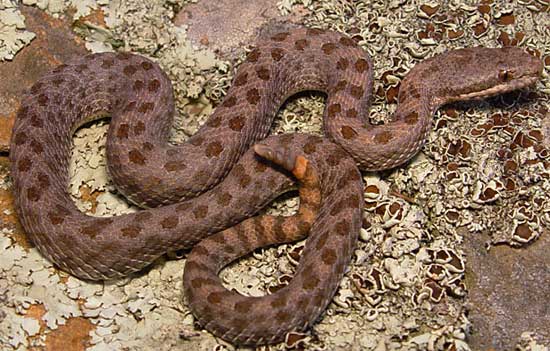
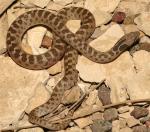
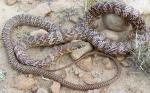
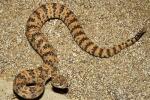
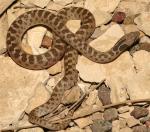
A small (up to 660 mm or 26" in total length excluding rattle), blue-gray, pale gray, or gray-brown rattlesnake with two rows of small, dark blotches running down the back.
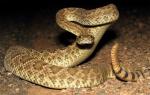
Dorsal blotches usually merge into one row near the tail. A dark stripe marks each side of the face, extending from behind the eye to the neck. The underside is cream with mottling of dark gray-brown. The pupils are vertically elliptical and the dorsal scales are keeled. The neck is slender and the head is broad and triangular. On the end of the tail is a rattle composed of a series of loosely interlocking keratinous sections. A new section is added each time the snake sheds its skin. The rattle segment nearest to the tail is orange.
DISTRIBUTION:
This snake is found in the Chiricahua, Pinaleño, Huachuca, and Santa Rita "sky island" mountain ranges of southeastern Arizona at elevations ranging from ca. 6000' to ca. 11,000'.
HABITAT:
The Twin-spotted Rattlesnake is found in Petran Subalpine Conifer Forest and Petran Montane Conifer Forest communities. It is most often encountered in taluses and rocky outcrops but it is also commonly encountered in relatively flat, rockless, open forest.
on sunny and unseasonably warm days.
DIET:
The Twin-spotted Rattlesnake feeds on lizards, small rodents, and birds. Cannibalism has been observed in this species. It uses venom injected through long, hollow, retractable fangs to kill and begin digesting its prey.
REPRODUCTION:
Mating takes place in summer. A litter of up to 9 young is born in summer.
REMARKS:
This rattlesnake is capable of delivering potent venom. If encountered it should be left alone. A large percentage of envenomations occur when a snake is handled or abused. Protected in the state of Arizona. It is against Arizona State law to harass, harm, pursue, hunt, shoot, wound, kill, trap, capture, or collect this animal or to attempt to engage in any such conduct.
|